
Breakfast
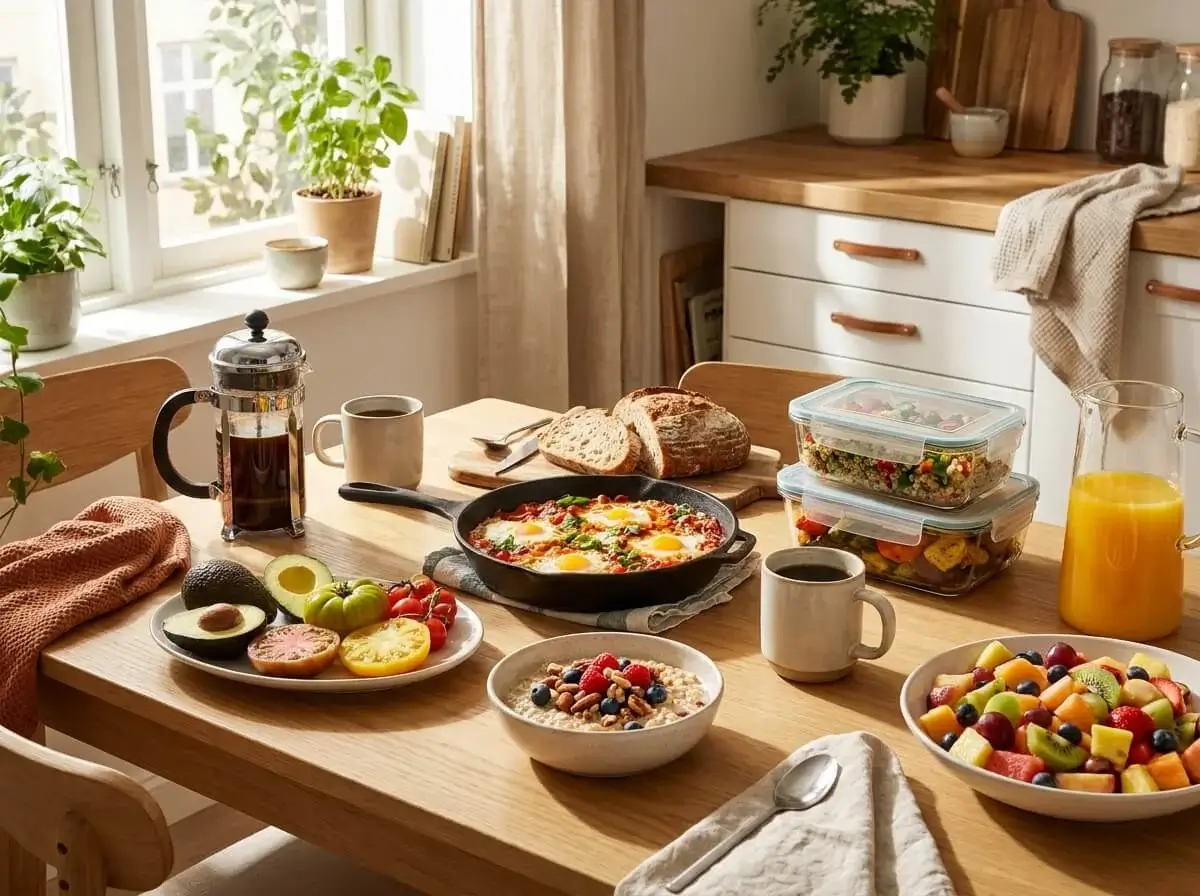
High-Protein Breakfast Bowl
A savory bowl that holds you until lunch instead of leaving you hungry by ten. Components keep separately for three days.
View Recipe →Nourished in a Hurry — healthy meals. Less stress. More time.
Balanced, beginner-friendly meals built on real food and honest timing — most on the table in 20 minutes, none longer than 30.
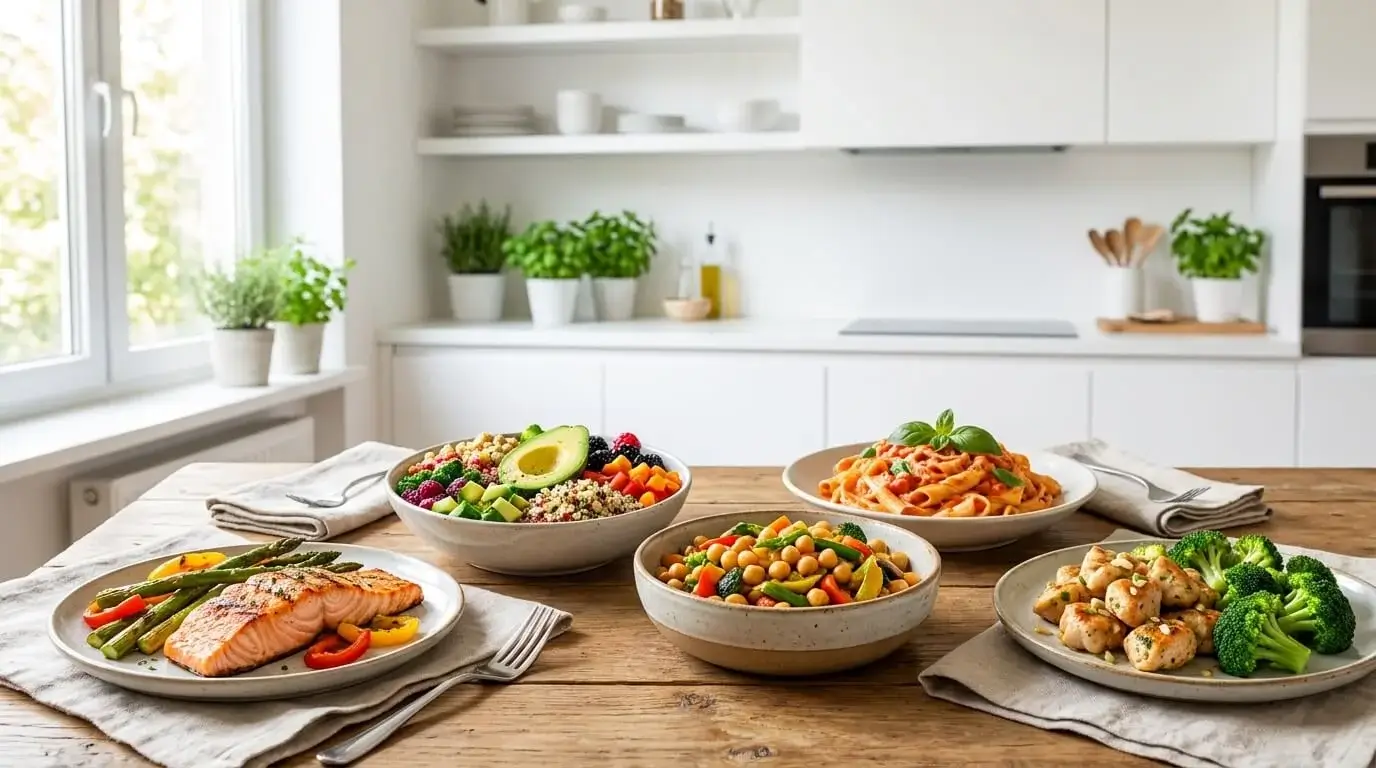
Fuel for your day
Browse by time, diet, or cooking method
Most recipe sites make you scroll. This one asks you a question instead: how much time do you have, and what are you in the mood for? Start with whichever answer you know first — the time, the diet, or the pan you feel like washing. Every path below leads to the same place: dinner, sooner.
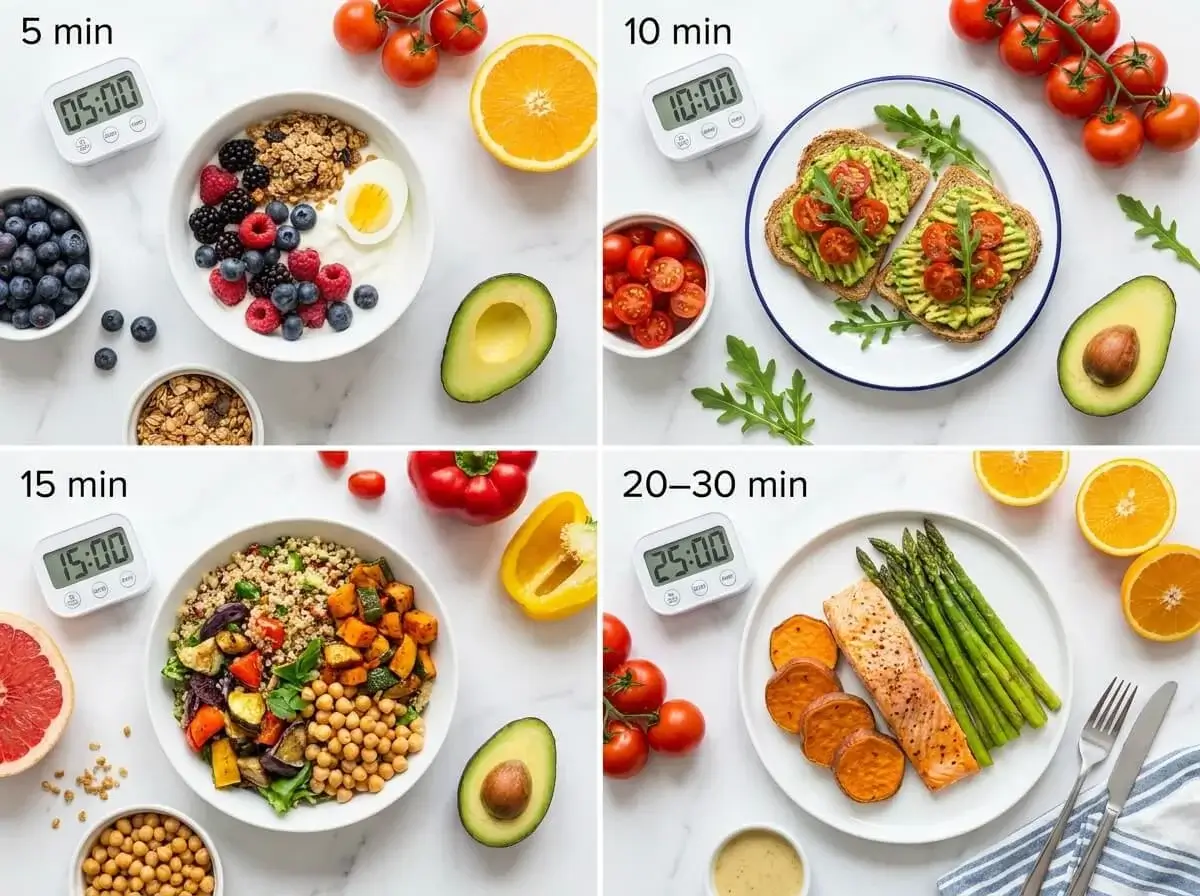
Start here when the clock is the constraint. These are the honest, tested times — prep included, not just active cooking.
No cook, ultra fast
Quick & easy prep
Hot, fresh & fast
Full meals, no fuss
Minimal cleanup
Whether you're eating a specific way or just steering toward more protein or more plants.
Fuel your body
Plant-based power
Keto-friendly picks
Safe & simple
Planning ahead, or just looking for something to read while dinner cooks.
Healthy meals, ready fast — every one cooked, timed and adjusted before it was written up
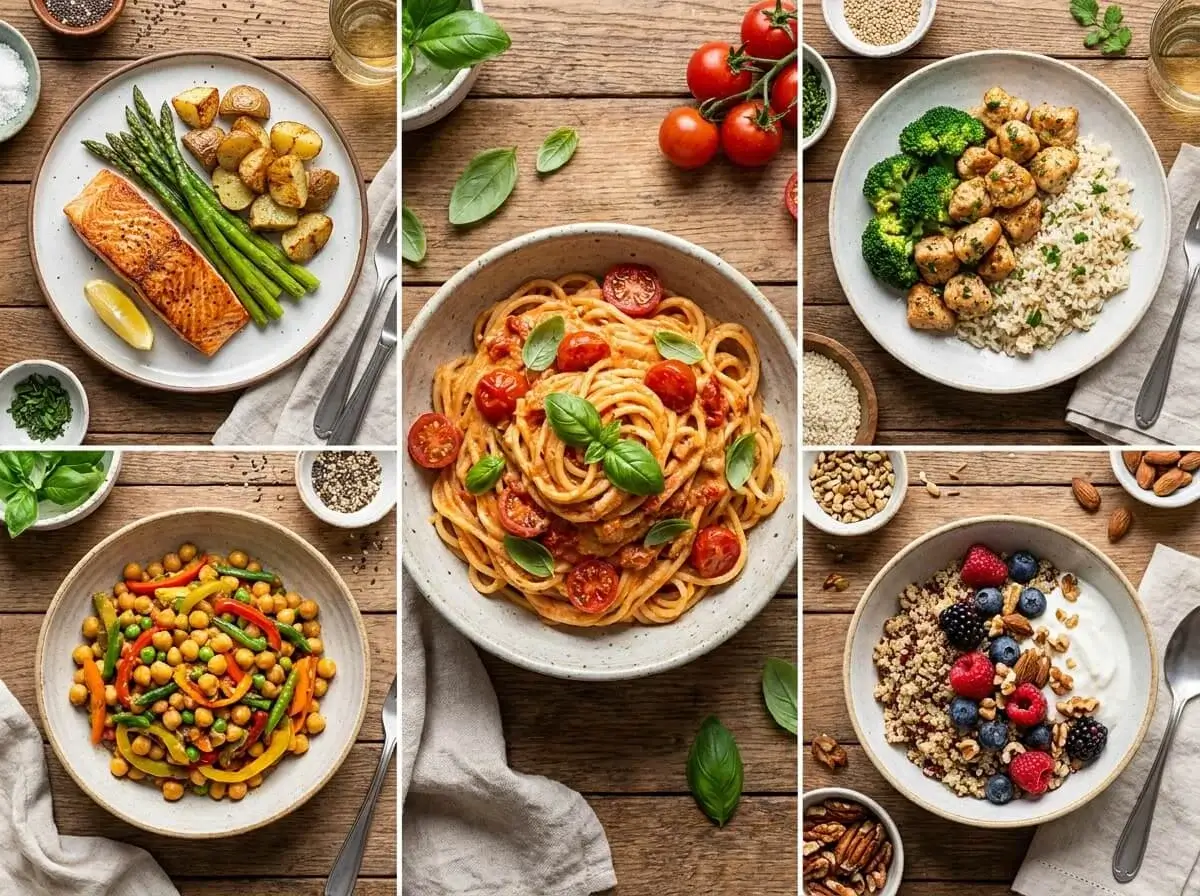
A savory bowl that holds you until lunch instead of leaving you hungry by ten. Components keep separately for three days.
View Recipe →Bite-sized chicken cooked hot and fast in a single skillet. The garlic goes in at the end — adding it early scorched it every time we tested.
View Recipe →Pasta, sauce and finish in the same pot. The pasta starch does the thickening, so there’s no cream needed and nothing to drain.
View Recipe →High-fiber, entirely plant-based, and forgiving with whatever vegetables are in the drawer. Blister the chickpeas — that texture is the whole dish.
View Recipe →Every recipe includes calories, protein, carbs and fat, plus storage and reheating notes. Browse the full collection →
The fastest route to dinner usually isn’t a different recipe — it’s a different pan.
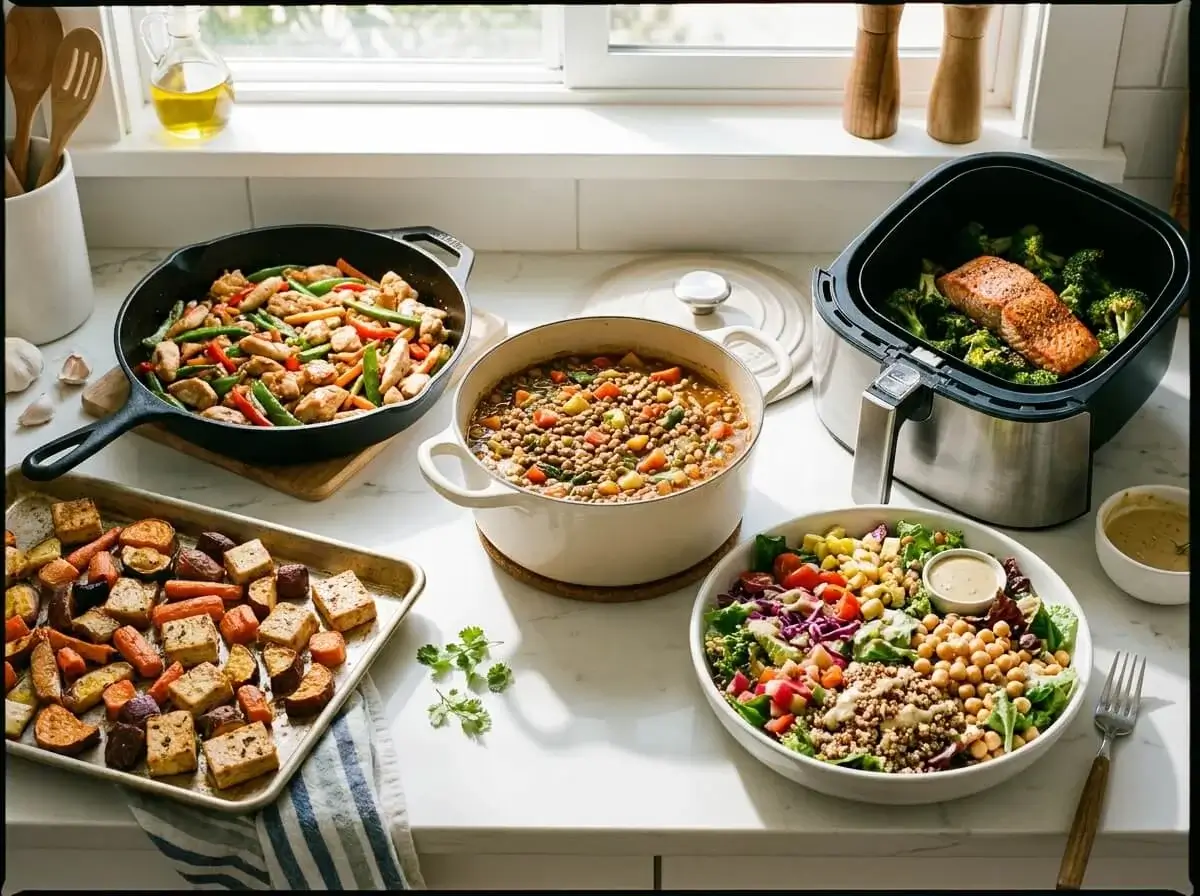
Matching the method to the ingredient is what turns a 40-minute meal into a 20-minute one, and it’s the single biggest lever most home cooks aren’t using.
| Method | Best For | Time | Cleanup | Beginner Friendly |
|---|---|---|---|---|
| One Pot | Pasta, rice | 20–30 min | Very low | ✓ |
| Skillet | Chicken, stir-fries | 10–20 min | Low | ✓ |
| Air Fryer | Vegetables, chicken | 10–20 min | Low | ✓ |
| Sheet Pan | Family meals | 20–30 min | Very low | ✓ |
| No Cook | Lunch | 5–10 min | None | ✓ |
The starch released by pasta or rice thickens the sauce as it cooks, so you skip a separate sauce step and a colander. Best when everything finishes at the same time. Start with our one-pot meals.
Fastest for protein. High heat, thin or small pieces, minimal crowding. Crowding the pan turns a sear into a steam — the most common reason a quick healthy dinner comes out grey instead of browned.
Suits anything you want crisp without oil-heavy roasting: vegetables, chicken pieces, and reheated leftovers that would otherwise go soft in a microwave.
The lowest-effort route for healthy weeknight meals feeding more than two. Everything on one tray, one temperature, one timer.
Assembly meals — grain bowls, wraps, big salads with a prepped protein. This is where meal prep pays off most. See 5-minute meals.
Cook to temperature, not to the clock. Times vary with your equipment, and safe internal temperatures differ by food type — check the USDA Safe Temperature Chart for poultry, fish and everything else.
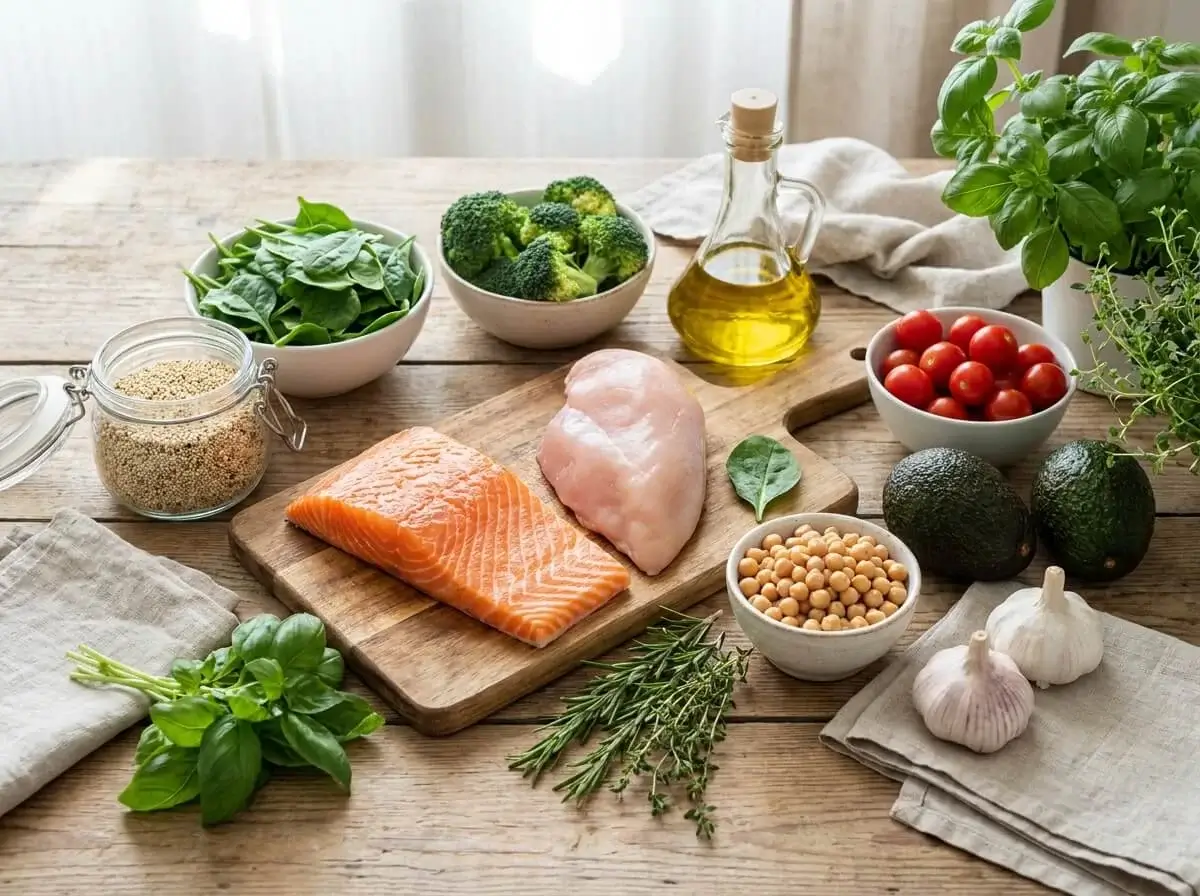
Simple whole-food ingredients make healthy cooking easier.
“Healthy” gets used loosely, so here’s what it means on this site specifically. Every recipe is built to be a balanced meal rather than a single macro target, which broadly follows the pattern described by Harvard’s Healthy Eating Plate — a plate weighted toward vegetables, with a lean protein, a whole grain and a healthy fat alongside.
What you won’t find: recipes that depend on a single specialty ingredient, restrictive framing, or “healthy” swaps that make the food worse. If a substitution costs too much in taste, we leave it out.
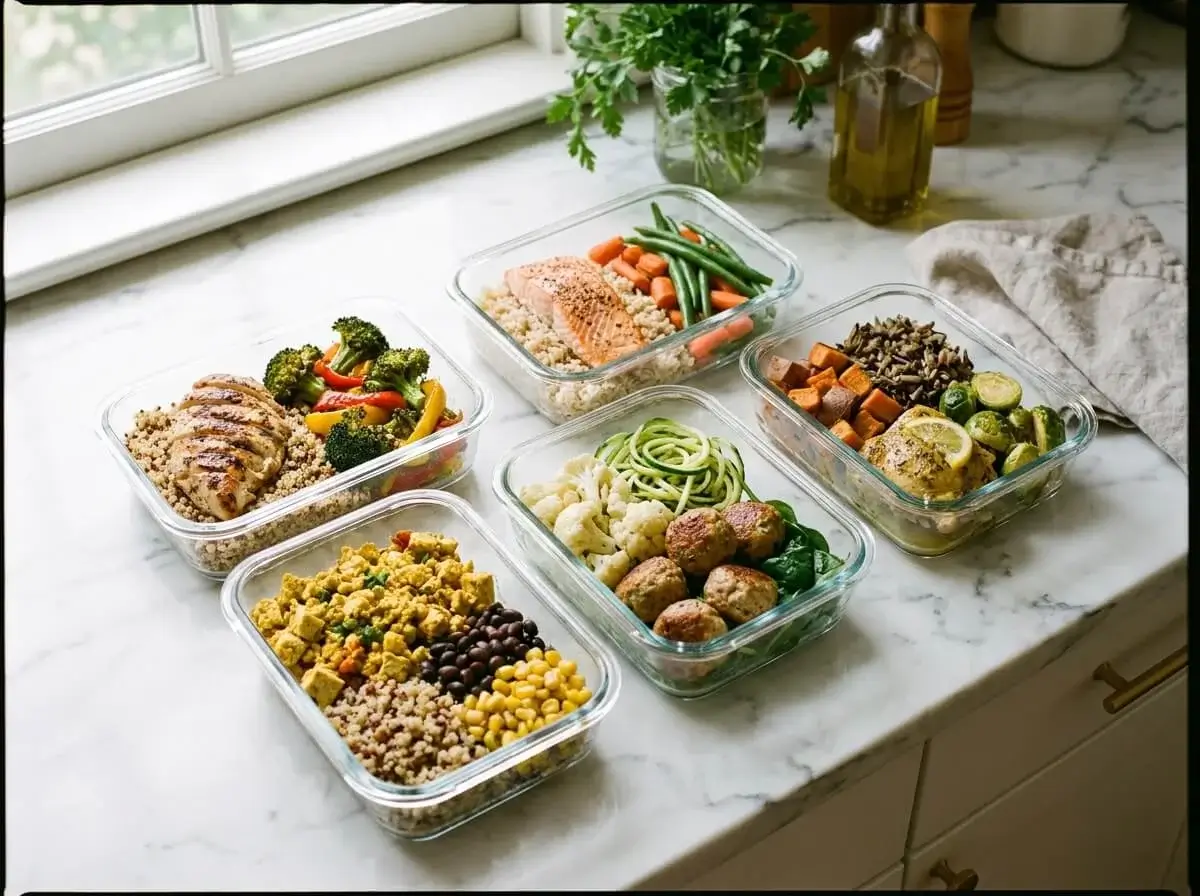
Cook once, eat healthy all week.
A quick recipe saves you 20 minutes. Prepping components saves you the whole week. You don’t need to cook five identical containers on a Sunday — a small amount of planning is one of the most practical ways to keep healthy choices realistic during a busy week, as MyPlate recommends.
Cook double the chicken, chickpeas or eggs you need tonight. Tomorrow’s meal becomes assembly.
Chop onions, peppers and broccoli when you unpack the shopping. Ten minutes once beats five every night.
Rice and quinoa reheat well and turn any protein into a full meal in minutes.
Freeze single servings rather than one large block — it thaws faster and you waste less.
| Food Type | Refrigerator | Freezer | Best Reheating Method |
|---|---|---|---|
| Cooked chicken | 3–4 days | Up to 4 months | Microwave or skillet |
| Cooked pasta | 3–5 days | Up to 2 months | Microwave with a splash of water |
| Cooked rice | 3–4 days | Up to 6 months | Microwave until steaming hot |
| Cooked vegetables | 3–5 days | 2–3 months | Skillet or microwave |
Refrigerate leftovers promptly rather than leaving them to cool on the counter, and check current storage guidance for anything you’re unsure about using the USDA’s FoodKeeper tool.
Nothing derails a weeknight faster than discovering you’re missing one ingredient.
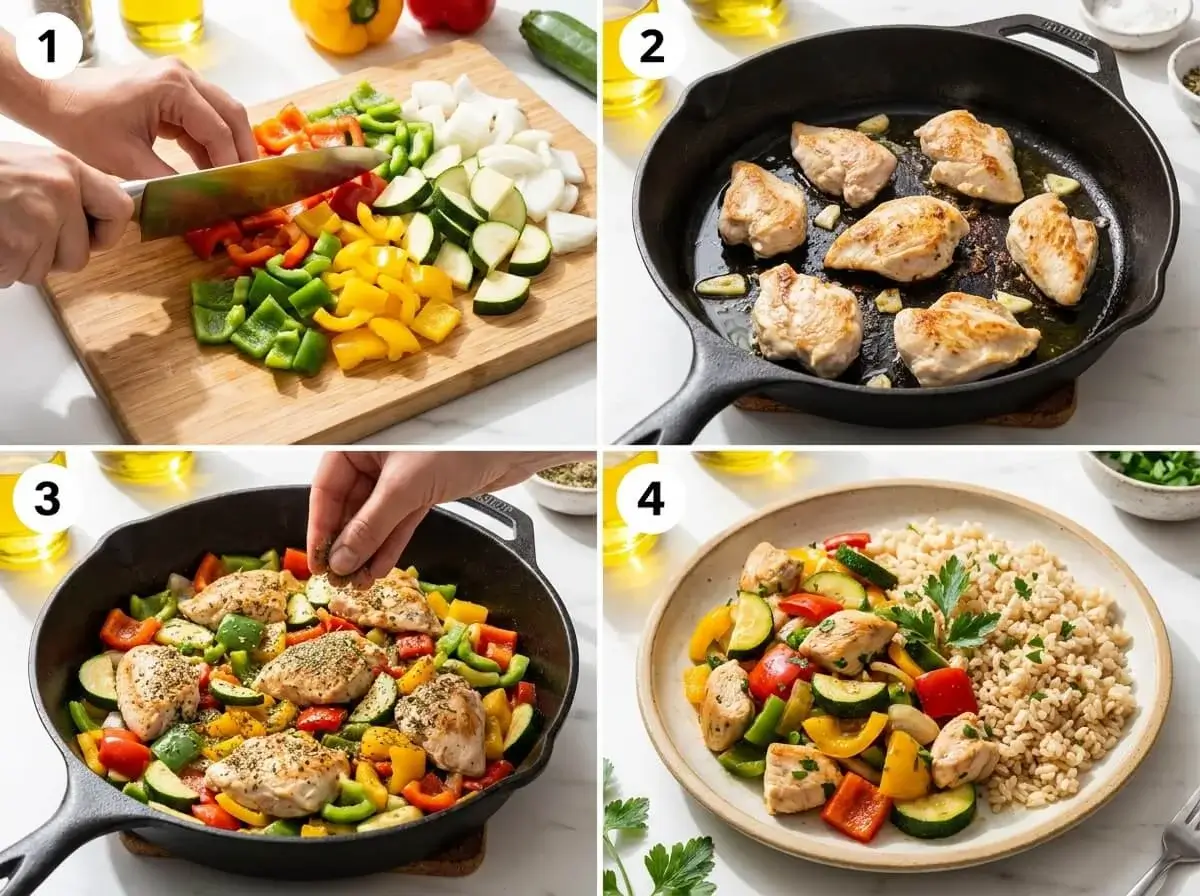
Almost every recipe here can flex around what’s actually in your kitchen.
A few things worth knowing before you swap. Tofu and chickpeas cook faster than chicken, so reduce the time rather than matching it. Brown rice and quinoa take longer than white rice — cook them ahead rather than trying to fit them into a 15-minute meal. Frozen spinach releases a lot of water, so squeeze it out first or your stir-fry will end up in a puddle.
Swapping butter for olive oil works in nearly everything savory, though you lose a little richness; a small squeeze of lemon at the end usually compensates.
The point isn’t precision. It’s that a missing ingredient shouldn’t mean ordering takeout.
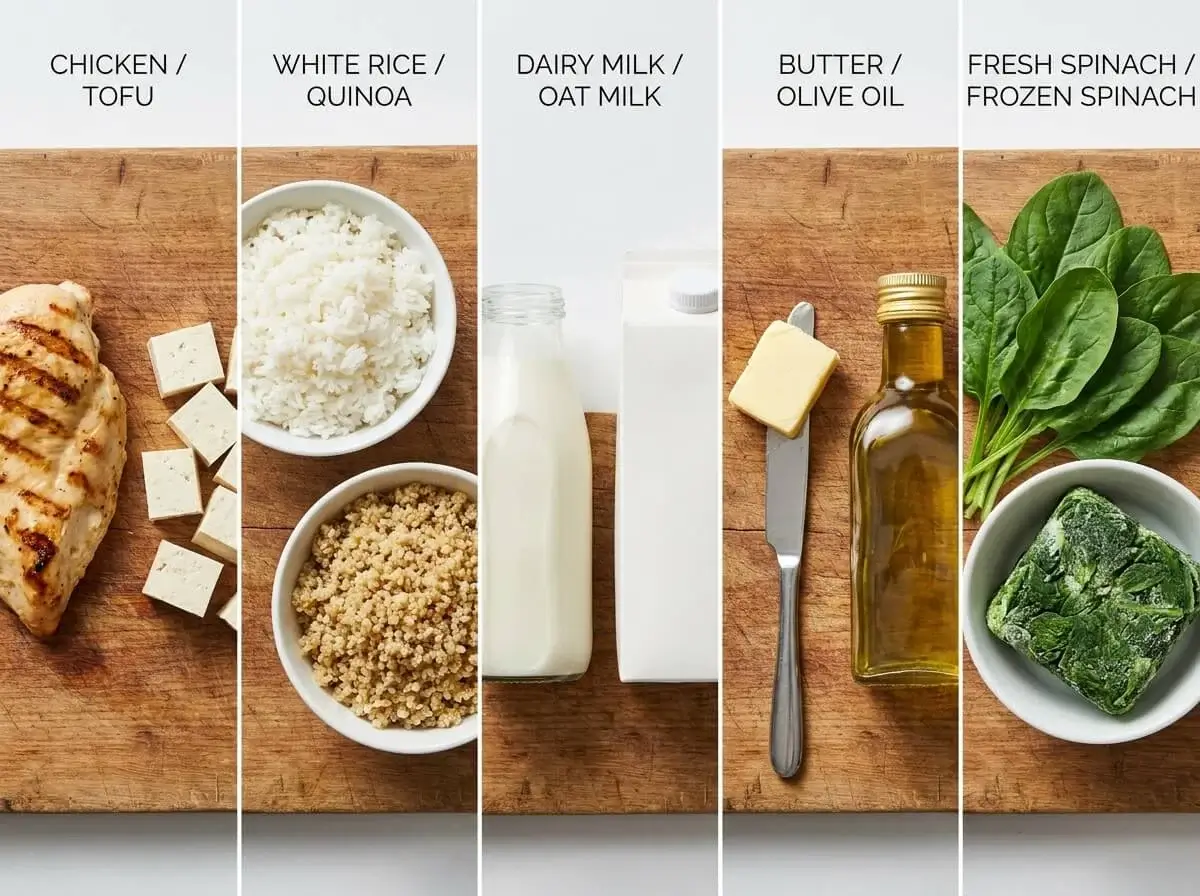
Fast cooking fails in predictable ways. Each of these has a fix that costs no extra time.
| Problem | Cause | Fix |
|---|---|---|
| Watery stir-fry | Pan overcrowded; vegetables steam instead of searing | Cook in two batches, or use a bigger pan and higher heat |
| Dry chicken | Cooked too long, or pieces cut unevenly | Cut to a uniform size and pull it off the heat slightly early — it keeps cooking |
| Overcooked vegetables | Everything added at once | Add by density: carrots first, peppers next, leafy greens last |
| Mushy pasta | Cooked past al dente, especially in one-pot recipes | Start testing 2 minutes before the package time; it firms up as the sauce thickens |
| Bland meals | Under-seasoned, or seasoned only at the start | Salt in layers, and finish with acid — lemon juice or vinegar wakes up almost anything |
Most recipe sites are one person’s word that a recipe works. Here, every recipe is developed and written by one of us, then cooked and edited by the other before it’s published.
That means the version you cook is the version that already worked twice, in two ordinary home kitchens — not a test kitchen with equipment you don’t own.
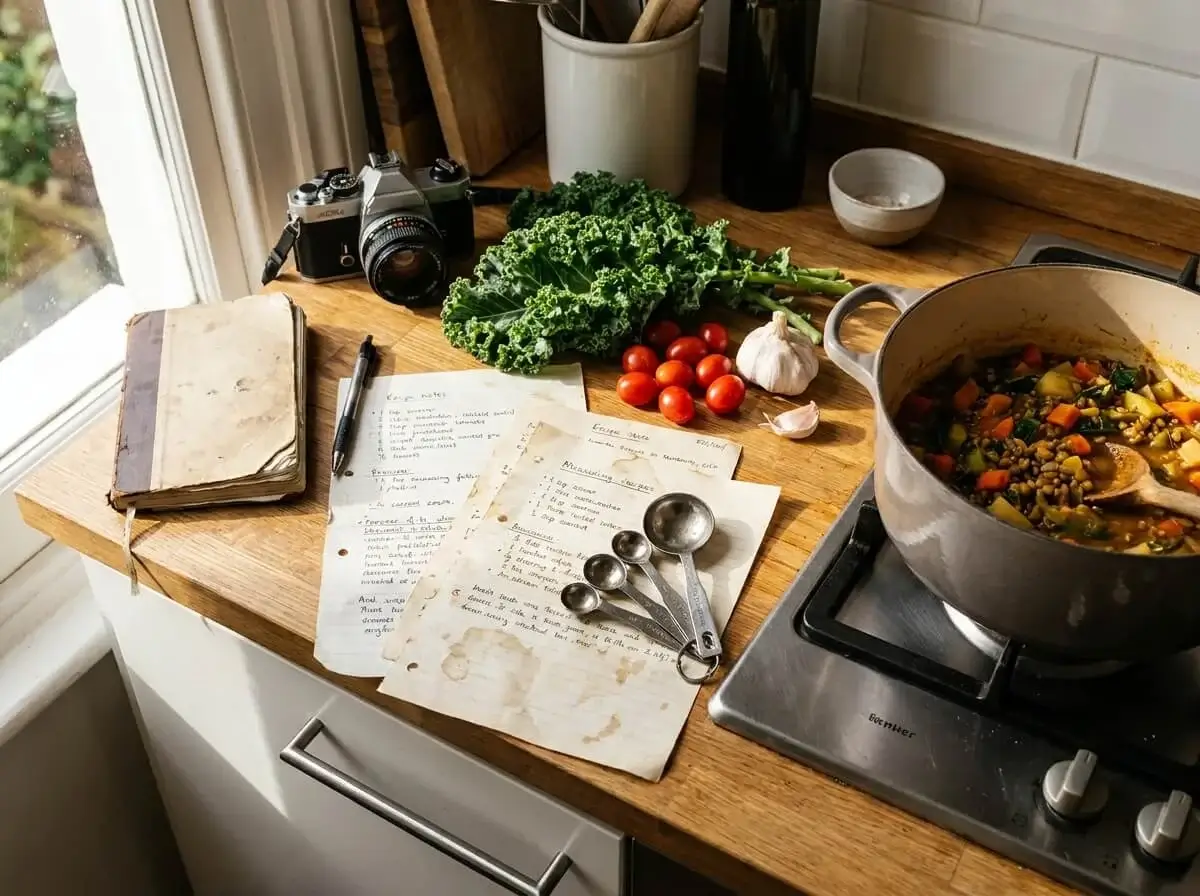
Every featured recipe is cooked, refined and written for real home kitchens.
The questions readers ask most about cooking quick, healthy meals.
A no-cook assembly meal is the fastest — a grain bowl or wrap built from a pre-cooked protein, chopped vegetables and a whole grain takes about five minutes. If you have a protein already cooked in the fridge, you can put a balanced meal together faster than delivery arrives. That’s the main argument for batch cooking.
Anything that doesn’t require cooking raw protein: Greek yogurt bowls, avocado toast with eggs you boiled earlier, tuna or chickpea salads, wraps, and big salads with a prepped protein. Scrambled eggs also fit comfortably. Browse our 5-minute meals for tested options.
One-pot pasta, sheet-pan chicken with vegetables, and stir-fries all land comfortably inside 30 minutes and produce a full balanced meal. Thirty minutes is enough to build real flavor — browning a protein properly, layering vegetables by density — rather than just getting food hot.
Prep components rather than whole meals. Cook a protein and a grain once, chop vegetables when you unpack the shopping, and weeknight cooking becomes assembly. Our guide to how to eat healthy when you have no time covers this in full.
Yes. Cooking time has almost nothing to do with nutritional quality — a 15-minute salmon fillet with vegetables is more balanced than a three-hour braise. What matters is what’s in the meal: a lean protein, plenty of vegetables, a whole grain or healthy fat, and enough seasoning to make it worth eating.
Canned chickpeas and beans, frozen vegetables, olive oil, garlic, canned tomatoes, quick-cooking grains like quinoa and couscous, eggs, and a few acids — lemons and vinegar. With those, most recipes on this site are achievable without a shopping trip.
Start with one-pan meals, where timing is forgiving and there’s little to coordinate. The Garlic Butter Chicken Bites and the Vegan Chickpea Stir-Fry are both hard to get wrong and teach techniques you’ll reuse constantly.
Prep components, not complete meals. Cook one protein, one grain, and chop vegetables — about 45 minutes total — then combine them differently through the week. It avoids the boredom of identical containers and takes a fraction of the time. More in our meal prep and healthy tips sections.
Quick healthy recipes shouldn’t require a free evening, specialty ingredients, or cooking experience you don’t have. Everything here is timed honestly, tested in a real kitchen, and written so you can cook it on the night you least feel like cooking. Start with the recipes →